

All Garages
All Workshops
All Carriage Houses
All Equestrian Buildings
Customer Photo Gallery
Buyer's Guide
Base Guide & Sizes
Average UK Garage Sizes
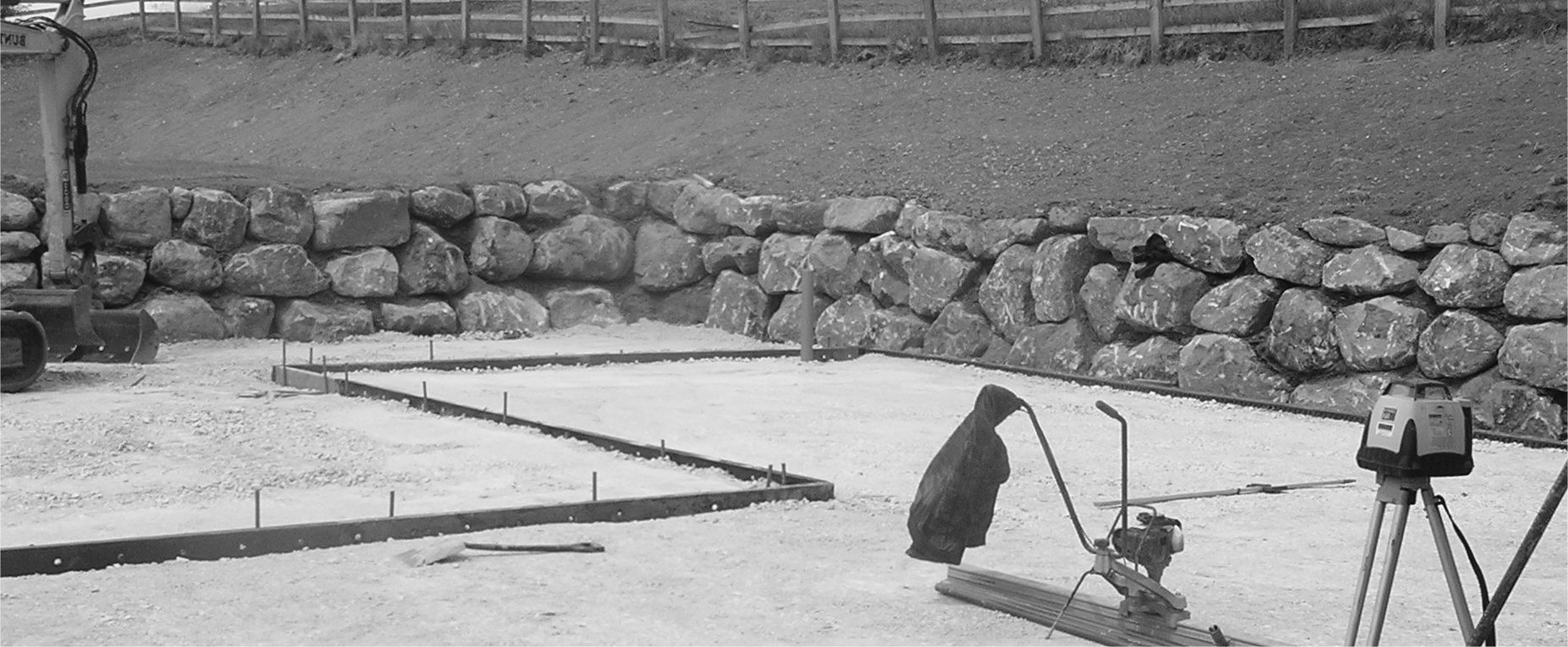
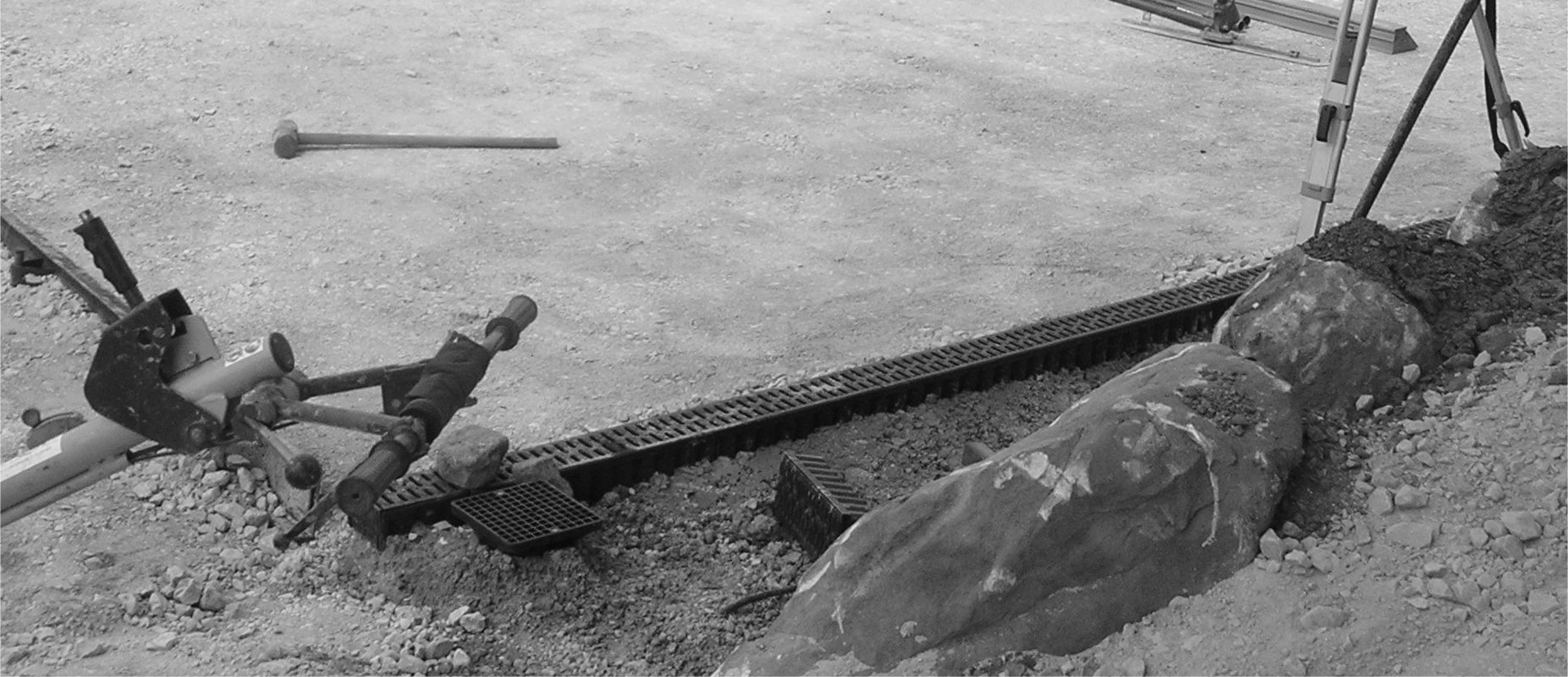
Before you install your new timber building, it’s essential to ensure it stands on a solid, level, and well-prepared base. A proper foundation not only provides stability but also protects your building from damp, movement, and premature wear. Below, we’ve outlined the best base options used across the UK — including concrete, paving slabs, and timber sleepers — along with step-by-step guidance for each.
A concrete base offers the most durable and long-lasting solution, perfect for heavy timber buildings such as workshops, garages, and large summerhouses. When installed to the exact size of your building (not oversized), it reduces water ingress and helps prolong the life of your timber floor.
Exceptionally strong and stable
Ideal for sloping or uneven ground
Low maintenance and long lifespan
Perfect for larger or heavier buildings
Mark out the area – Use pegs and string to mark the exact footprint of your building.
Excavate – Remove soil to a depth of 100–150 mm (4–6 inches).
Lay a sub-base – Add and compact 75–100 mm of MOT Type 1 hardcore or crushed stone.
Build formwork – Use timber boards to form the shape, ensuring it’s level and square.
Add a damp-proof membrane (DPM) – Use 1200-gauge polythene to stop moisture rising.
Pour the concrete – Use a C20 or C25 mix, poured to about 100 mm deep.
Level and smooth – Use a straight edge and float; allow 48 hours to set.
Optional finish – Lay one course of engineering bricks on top to keep the timber frame raised and dry.
A paving slab base is a quick, reliable, and cost-effective method, particularly suitable for smaller sheds and summerhouses. When correctly laid, it provides excellent support and allows for easy adjustment.
Affordable and straightforward to install
Suitable for most small to medium sheds
Easy to repair or replace individual slabs
Excavate the area to 100–125 mm depth, slightly larger than the shed footprint.
Lay hardcore – Compact 75 mm of MOT Type 1 or crushed stone.
Add a sand and cement bed – Mix 1 part cement to 8 parts sharp sand (25–40 mm deep).
Lay the slabs – Use 450 mm or 600 mm concrete slabs, level them with a rubber mallet.
Check levels – Ensure a flat and even surface using a long spirit level.
Allow to set – Let the mortar cure for at least 24–48 hours before siting your shed.
A sleeper base provides a sturdy, attractive, and well-drained foundation — especially useful on uneven or sloping gardens. It’s a great option if you want a raised platform and a more natural appearance.
Ideal for sloped or uneven ground
Provides airflow beneath the building
Quick to construct and visually appealing
Prepare the site – Clear vegetation and roughly level the area.
Lay a weed membrane – Use a heavy-duty landscape fabric.
Add a gravel base – Spread and compact 50–75 mm of gravel for drainage.
Position the sleepers – Use treated softwood or oak sleepers (2.4 m x 200 mm x 100 mm typical size).
Fix securely – Screw or bolt the corners together with long timber fixings or metal plates.
Anchor if needed – Drive rebar or ground spikes through the sleepers for extra stability.
Check for level – Ensure the top surface is flat before positioning your timber building.
Always ensure your base is completely level, solid, and well-drained.
Avoid siting your shed directly on grass, soil, or gravel alone.
Leave a small gravel margin around the base to prevent splashback and improve drainage.
For sloping or complex sites, it’s often best to consult a local builder or landscaper.
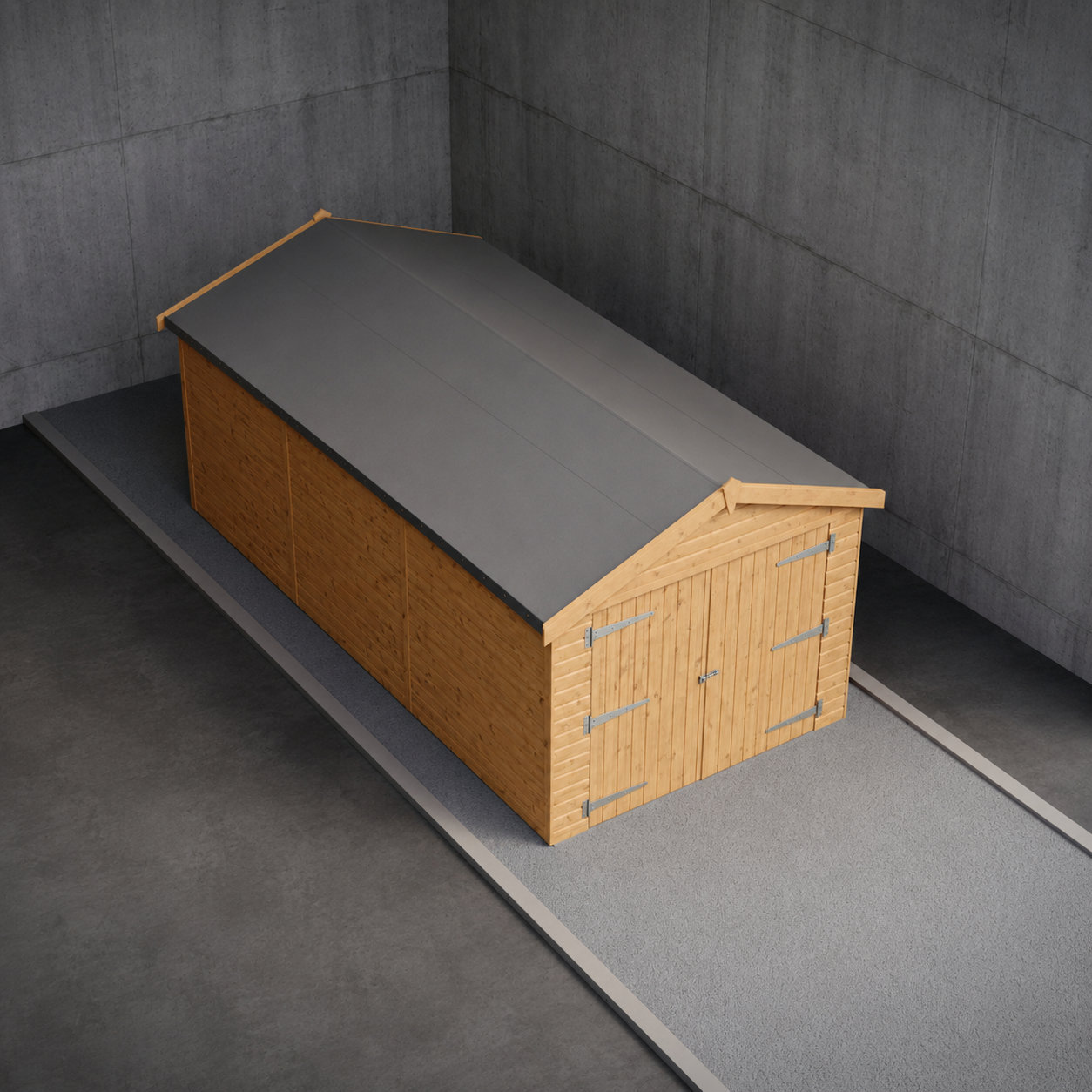
All base dimensions shown are 16mm smaller on all sides than the stated building size. This allows the building to slightly overhang the base, helping to improve water runoff and prevent the base from being visible around the perimeter of the building.
For example, a 12′ x 8′ building would require a base measuring 11′ 10¾” x 7′ 10¾” (3626mm x 2406mm). All recommended base sizes in the table below have already been adjusted accordingly.
Base dimensions: All recommended base sizes are 16mm smaller on all sides than the stated building size, meaning 32mm is deducted overall from both length and width.
| Building Size | Recommended Base | Base Metric |
|---|---|---|
| 12′ × 8′ | 11′ 10¾” × 7′ 10¾” | 3626 × 2406 mm |
| 12′ × 9′ | 11′ 10¾” × 8′ 10¾” | 3626 × 2711 mm |
| 12′ × 10′ | 11′ 10¾” × 9′ 10¾” | 3626 × 3016 mm |
| 12′ × 12′ | 11′ 10¾” × 11′ 10¾” | 3626 × 3626 mm |
| 14′ × 8′ | 13′ 10¾” × 7′ 10¾” | 4235 × 2406 mm |
| 14′ × 9′ | 13′ 10¾” × 8′ 10¾” | 4235 × 2711 mm |
| 14′ × 10′ | 13′ 10¾” × 9′ 10¾” | 4235 × 3016 mm |
| 14′ × 12′ | 13′ 10¾” × 11′ 10¾” | 4235 × 3626 mm |
| 14′ × 14′ | 13′ 10¾” × 13′ 10¾” | 4235 × 4235 mm |
| 16′ × 8′ | 15′ 10¾” × 7′ 10¾” | 4845 × 2406 mm |
| 16′ × 9′ | 15′ 10¾” × 8′ 10¾” | 4845 × 2711 mm |
| 16′ × 10′ | 15′ 10¾” × 9′ 10¾” | 4845 × 3016 mm |
| 16′ × 12′ | 15′ 10¾” × 11′ 10¾” | 4845 × 3626 mm |
| 16′ × 14′ | 15′ 10¾” × 13′ 10¾” | 4845 × 4235 mm |
| 16′ × 16′ | 15′ 10¾” × 15′ 10¾” | 4845 × 4845 mm |
| 18′ × 8′ | 17′ 10¾” × 7′ 10¾” | 5454 × 2406 mm |
| 18′ × 9′ | 17′ 10¾” × 8′ 10¾” | 5454 × 2711 mm |
| 18′ × 10′ | 17′ 10¾” × 9′ 10¾” | 5454 × 3016 mm |
| 18′ × 12′ | 17′ 10¾” × 11′ 10¾” | 5454 × 3626 mm |
| 18′ × 14′ | 17′ 10¾” × 13′ 10¾” | 5454 × 4235 mm |
| 18′ × 16′ | 17′ 10¾” × 15′ 10¾” | 5454 × 4845 mm |
| 18′ × 18′ | 17′ 10¾” × 17′ 10¾” | 5454 × 5454 mm |
| 20′ × 9′ | 19′ 10¾” × 8′ 10¾” | 6064 × 2711 mm |
| 20′ × 10′ | 19′ 10¾” × 9′ 10¾” | 6064 × 3016 mm |
| 20′ × 12′ | 19′ 10¾” × 11′ 10¾” | 6064 × 3626 mm |
| 20′ × 14′ | 19′ 10¾” × 13′ 10¾” | 6064 × 4235 mm |
| 20′ × 16′ | 19′ 10¾” × 15′ 10¾” | 6064 × 4845 mm |
| 20′ × 18′ | 19′ 10¾” × 17′ 10¾” | 6064 × 5454 mm |
| 20′ × 20′ | 19′ 10¾” × 19′ 10¾” | 6064 × 6064 mm |
| 24′ × 9′ | 23′ 10¾” × 8′ 10¾” | 7283 × 2711 mm |
| 24′ × 10′ | 23′ 10¾” × 9′ 10¾” | 7283 × 3016 mm |
| 24′ × 12′ | 23′ 10¾” × 11′ 10¾” | 7283 × 3626 mm |
| 24′ × 14′ | 23′ 10¾” × 13′ 10¾” | 7283 × 4235 mm |
| 24′ × 16′ | 23′ 10¾” × 15′ 10¾” | 7283 × 4845 mm |
| 24′ × 18′ | 23′ 10¾” × 17′ 10¾” | 7283 × 5454 mm |
| 24′ × 20′ | 23′ 10¾” × 19′ 10¾” | 7283 × 6064 mm |
| 30′ × 9′ | 29′ 10¾” × 8′ 10¾” | 9112 × 2711 mm |
| 30′ × 10′ | 29′ 10¾” × 9′ 10¾” | 9112 × 3016 mm |
| 30′ × 12′ | 29′ 10¾” × 11′ 10¾” | 9112 × 3626 mm |
| 30′ × 14′ | 29′ 10¾” × 13′ 10¾” | 9112 × 4235 mm |
| 30′ × 16′ | 29′ 10¾” × 15′ 10¾” | 9112 × 4845 mm |
| 30′ × 18′ | 29′ 10¾” × 17′ 10¾” | 9112 × 5454 mm |
| 30′ × 20′ | 29′ 10¾” × 19′ 10¾” | 9112 × 6064 mm |
| 36′ × 9′ | 35′ 10¾” × 8′ 10¾” | 10941 × 2711 mm |
| 36′ × 10′ | 35′ 10¾” × 9′ 10¾” | 10941 × 3016 mm |
| 36′ × 12′ | 35′ 10¾” × 11′ 10¾” | 10941 × 3626 mm |
| 36′ × 14′ | 35′ 10¾” × 13′ 10¾” | 10941 × 4235 mm |
| 36′ × 16′ | 35′ 10¾” × 15′ 10¾” | 10941 × 4845 mm |
| 36′ × 18′ | 35′ 10¾” × 17′ 10¾” | 10941 × 5454 mm |
| 36′ × 20′ | 35′ 10¾” × 19′ 10¾” | 10941 × 6064 mm |
 Garden Sheds
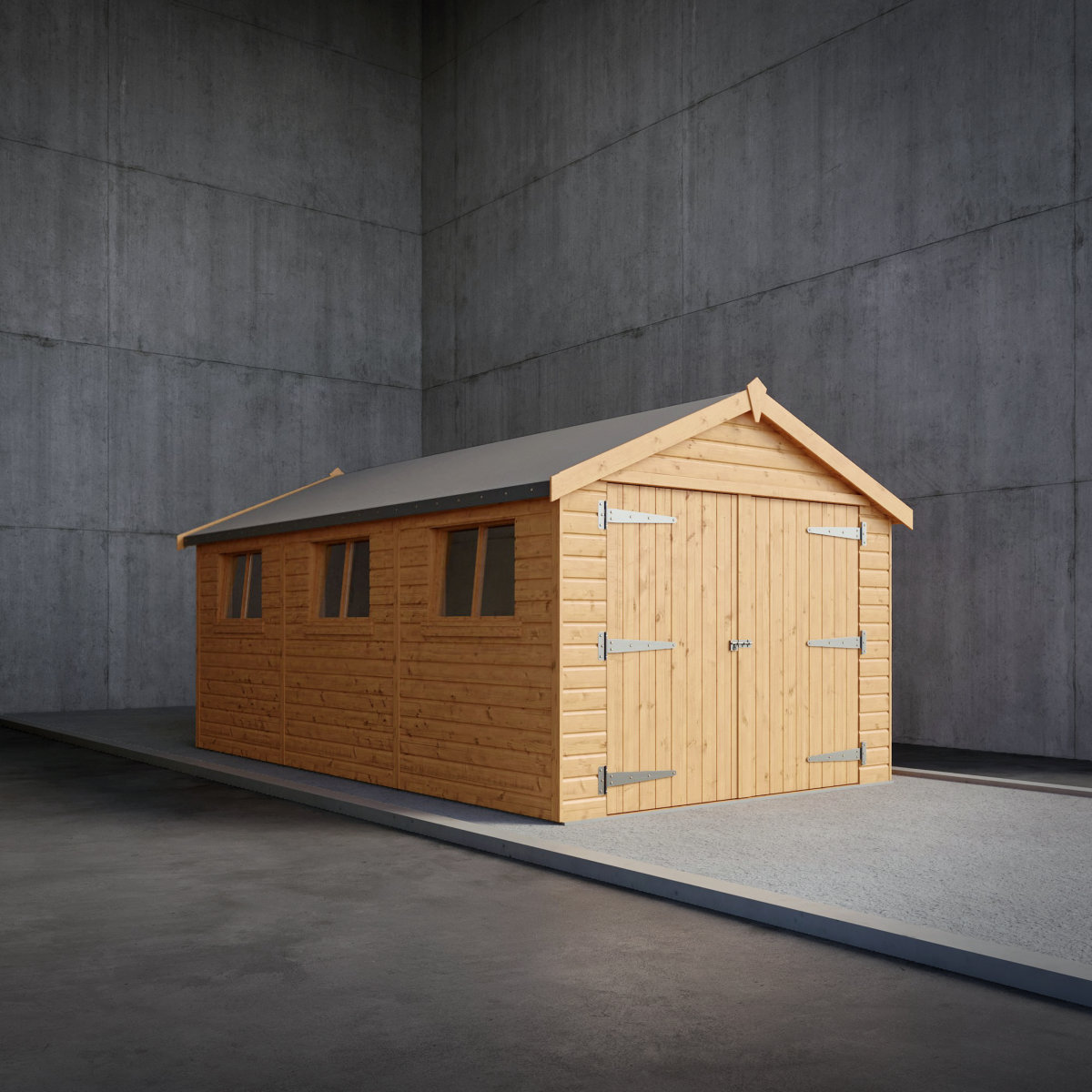 Garages
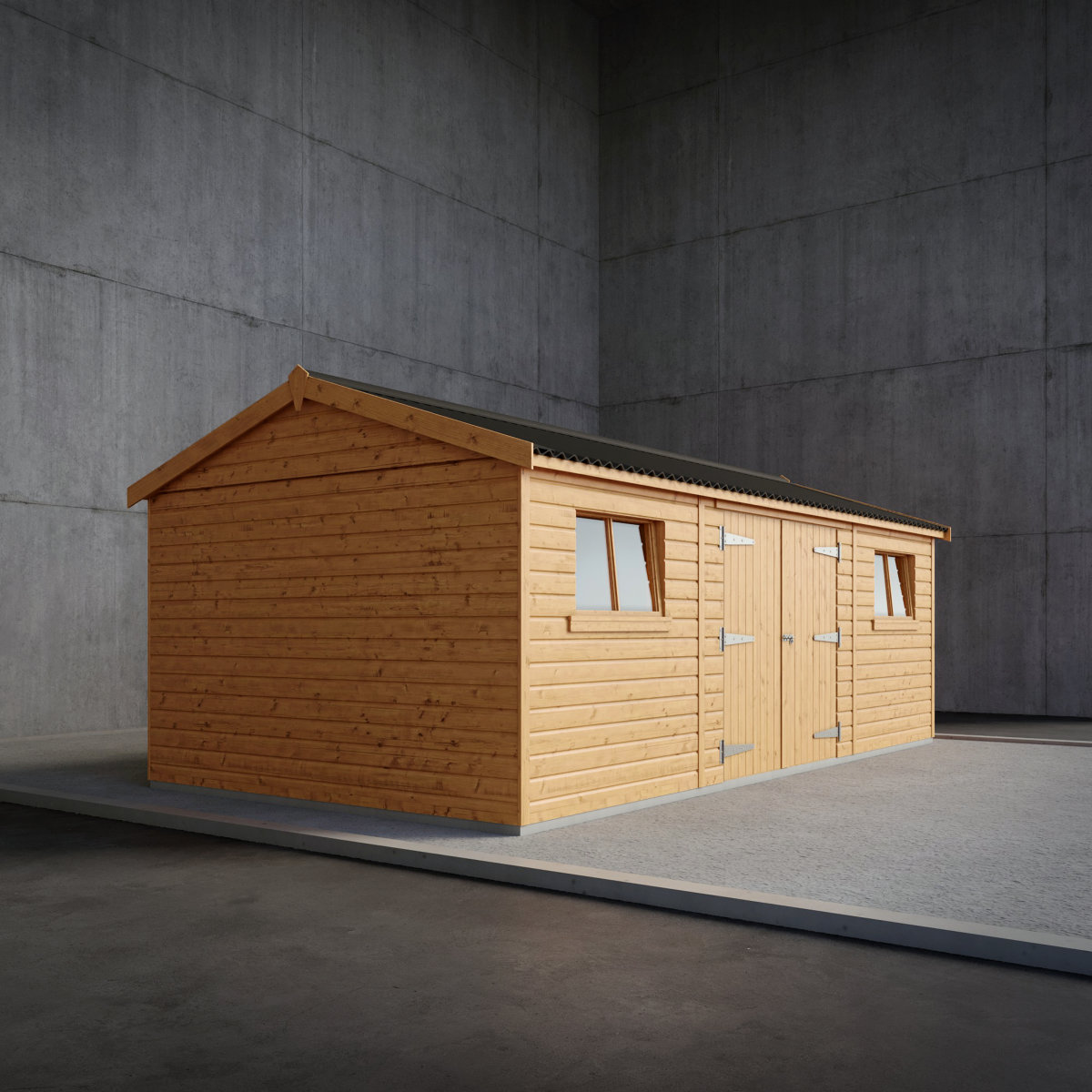 Workshops
 Carriage Houses
 Field Shelters